

I sat with a CEO once, a few weeks after the worst Monday of his career, while he tried to work out when it had actually begun. His logistics business had a driver seriously injured in an accident over a weekend. The vehicle involved had been flagged for a maintenance check a fortnight earlier. The check had been deferred twice, because the fleet was overstretched and the operations team were under real pressure to hit delivery targets, and taking a vehicle off the road felt like a cost the week couldn’t absorb.
Here’s what struck me most about that conversation. He wasn’t looking for someone to blame, and to his great credit he never found one, because there wasn’t one. No single reckless decision existed anywhere in the chain. A known issue had been raised more than once, acknowledged every time, and quietly pushed down the list every time, because dealing with it properly was inconvenient and the consequences of not dealing with it were theoretical. Right up until they weren’t.
He kept trying to date the failure to that Monday morning email. It didn’t start there. It started weeks earlier, in a series of small deferrals that felt sensible at the time, made by decent people doing their best under pressure.
I recognised the pattern immediately, because I’d lived it. Not in logistics; the industry doesn’t matter, the mechanics never change. There were stretches in my own consultancy years when I knew precisely what needed addressing, said so out loud in meetings, and then let the weight of the week bury it. We were busy. The timing wasn’t right. I’d deal with it next month. I told myself I was being sensible. I was making the comfortable choice and calling it strategy.
The building was already cracked
Think about what actually keeps a building standing through a storm. It isn’t the weather forecast, and it isn’t how the occupants behave on the night. A sound building survives because the structure was right long before the wind arrived. The foundations went in properly. Nobody saved a fortnight by thinning the materials.
A building with a crack is a different proposition. Under normal conditions it looks fine. It functions. People walk past the weakness every day without seeing it. When the storm comes, the wind doesn’t create anything. It finds the crack, and the crack spreads.
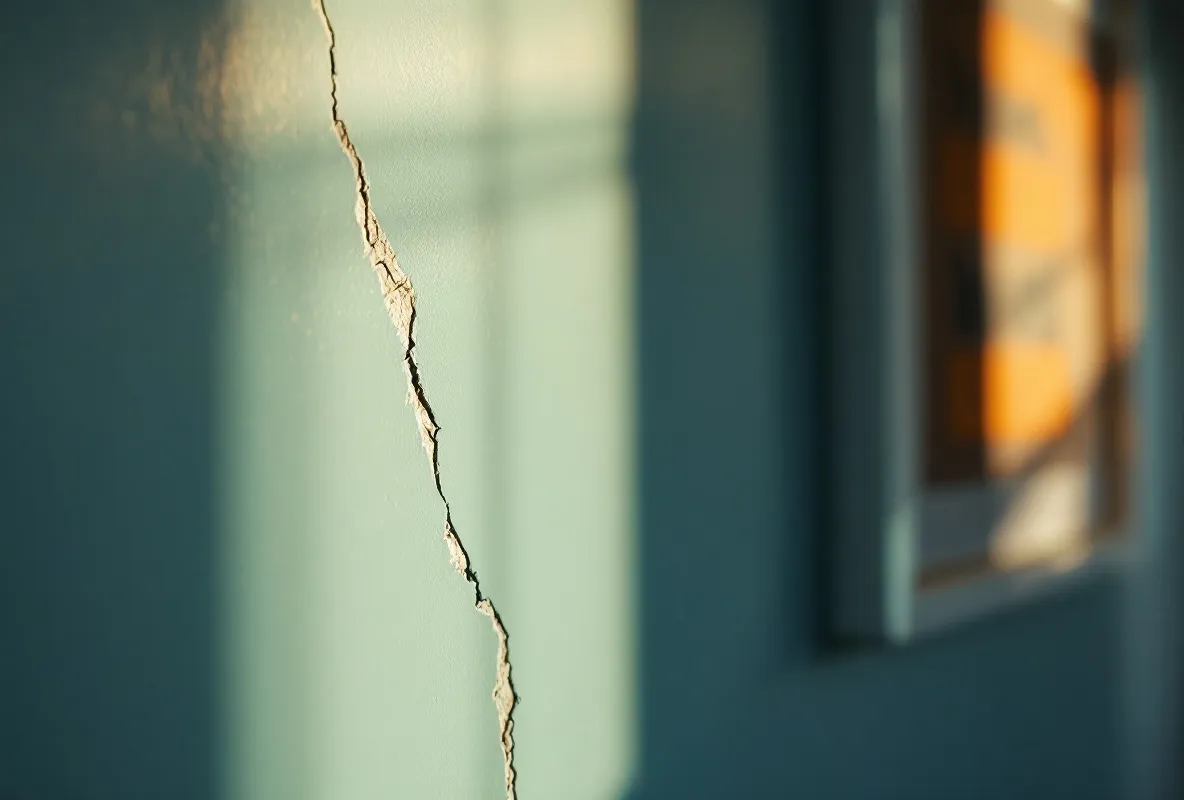
Leadership works the same way, and this is the idea I most want you to take from this piece. Pressure doesn’t create leadership failure. It exposes the cracks that were already in the discipline.
In calm conditions, you cannot tell a sound leadership team from a cracked one. I mean that literally. I’ve sat with both kinds, and if you photographed them on an ordinary Tuesday you couldn’t tell them apart. Decisions get made. Strategies get followed. Everyone looks aligned, principled and steady. The difference only becomes visible when something arrives with enough force to test the structure, and by then the choice about what kind of structure you built has long since been made.
Where the cracks live
After years of watching leadership teams under pressure, my own included, I can tell you the cracks are not randomly distributed. They turn up in the same places, again and again.
The first place is always truth. When pressure rises, uncomfortable facts stop travelling. Reports arrive slightly more optimistic than the reality justifies. Nobody decides to lie; a culture simply narrows, one filtered update at a time, until the people at the top are steering by instruments that no longer read true. It’s remarkable how fast an open culture can close when the stakes go up.
The second is the gap between what a leadership team says it values and what its decisions reveal. Stated priorities start to bend. The investment in people gets deferred because now isn’t the right time. The values on the wall stay exactly where they are, and the behaviour in the room drifts quietly away from them. People notice. They always notice.
Conviction cracks too, and so does decision-making. The strategy agreed last quarter starts to feel riskier, though no evidence has changed, only the temperature. Decisions that should take a day take a week. Committees form. More data gets requested, not because the existing data is insufficient, but because requesting more data is a socially acceptable way of not deciding.
The crack that does the most lasting damage, though, is ownership. Under enough pressure, leaders begin protecting their own areas rather than the enterprise. Silos harden. When things go wrong, the instinct becomes establishing that it wasn’t my area, my team, my call. Collective responsibility gives way to individual self-preservation, and once that starts, everything else accelerates.
None of these appear overnight. They develop over months or years, in the space between what a leadership team says and what it does, and in calm weather they cost nothing at all. That’s what makes them so easy to live with.
Go back to that logistics business and you can watch several of them working together. The truth crack: the maintenance flag was raised, then softened into an item on a list, then into an assumption someone else was handling it. The alignment crack: a company that would have told you, sincerely, that safety was its first value, revealing through two small deferrals that delivery targets outranked it that fortnight. The ownership crack: operations assuming fleet had it, fleet assuming operations had accepted the risk. Three hairlines, none of them visible in any single meeting, all of them load-bearing by the time the weekend came.
The story we tell afterwards
There’s a second pattern that keeps the first one alive, and it operates after the damage is done.
When pressure exposes a crack, the most common response I see isn’t honest examination. It’s narrative reconstruction. We had no choice. The market shifted faster than anyone predicted. In the circumstances, it was the best decision available. These sentences would pass without comment in any boardroom in the country, and they all do the same job: they remove the leader from the equation. The failure becomes weather, something that happened to the team rather than something the team’s behaviour built. The crack never gets examined. It gets papered over with a plausible explanation, and it sits there waiting for the next storm.
I’m not unsympathetic. Leading under pressure is genuinely hard, nobody gets every call right, and I carry my own scars from the calls I got wrong. There’s a difference, though, between acknowledging a decision was difficult and pretending the outcome was inevitable. The story you tell about a failure decides whether anything changes. If the story is that circumstances forced your hand, the plan becomes hoping for better luck. If the story is that pressure found a weakness in your discipline, you’ve got something you can actually strengthen.
Only one of those stories leads anywhere.

The quiet moment that decides it
In every leadership failure I’ve been close to, there’s a moment that determined everything afterwards, and it’s never the dramatic one. It’s the quiet one, weeks or months earlier, when someone decided to accommodate the crack rather than confront it.
I can show you mine. There was a senior member of my own team whose performance had been slipping for months. Nothing dramatic, nothing that forced a confrontation, just consistently below where it needed to be. I knew it. The team knew it. For a long time I said nothing, because the conversation would have meant disrupting a relationship I valued, admitting I’d already waited too long, and rattling the team at a moment we couldn’t afford it. I told myself I was being careful. I was being cowardly. When I finally had the conversation, months late, it went better than I’d feared. It almost always does. The delay still cost both of us more than it needed to.
He who does nothing wrong does nothing at all. I believe that completely, and I’d defend any leader whose bold call didn’t come off. What I was doing wasn’t that. Drifting away from your own standards because holding them has become inconvenient isn’t the cost of leadership. It’s the erosion of it.
These moments compound, that’s the trouble. Each accommodation makes the next one slightly easier, slightly more justifiable, slightly more normal. The threshold for acceptable moves, and nobody in the room ever formally agreed to move it.
Find the crack before the weather does
So the practical question isn’t how you’ll perform in the storm. By then the structure is whatever you built. The question is what you’re prepared to look at now, while looking is still cheap.
You already know where to start, because your cracks are in the same five places everyone’s are. The conversation you’re not having. The report you suspect is kinder than the truth. The strategic commitment that’s softening for no evidential reason. The decision that’s been “under consideration” long enough to become furniture. The colleague quietly protecting a patch instead of the whole.
Pick the one that made you wince slightly as you read it. That wince is worth more than any away-day. It’s the sound of a crack being noticed in calm weather, which is the only time noticing it is worth anything.
If you want to make the inspection a habit rather than a one-off, I’d offer a simple discipline my clients find uncomfortable in exactly the right way. Once a quarter, in an ordinary leadership meeting with nothing burning, take twenty minutes on three questions. What do we all know needs doing that we are not doing? Where has a report or a forecast been kinder to us than the evidence deserved? Which decision have we been considering for so long that not deciding has quietly become the decision? Insist on names and dates in the answers, write them down, and read last quarter’s answers out first. The first time a team does this it produces a slightly awkward silence, followed by the most useful conversation they’ve had all year. A structural survey costs a little dignity. It’s still cheaper than the storm.
The question I’d leave you with is the one that CEO couldn’t stop asking, just pointed forwards instead of back. Somewhere in your organisation right now there’s a deferral that feels sensible this week. When the pressure eventually arrives and finds it, what will you wish you’d done about it today?
This idea is one part of a larger framework. It’s called RESOLVE, built from years of watching exactly these patterns, and it sits at the centre of my forthcoming book, The Leader with Resolve, out on 1 October 2026.
If you’d rather find your cracks before the weather does, a diagnostic conversation costs you nothing but the honesty to have it. You can also see where your own leadership team’s discipline sits right now with the free RESOLVE diagnostic, which takes about two minutes and asks for nothing in return.